
Designing with thin brick
Thin brick basics.
Thin brick is a fired clay or shale unit made to ASTM C1088 and bonded to the wall as adhered veneer. This page covers how it is made, what the standards ask of the wall, and the sizes and bonds to design with. It is the content of Speedymason's AIA course, on a page.
0.65 lb
per thin brick, against 3.8 lb face brick
9,572
square feet per truckload, against 1,637
80%
less clay per unit than a face brick
2-5/8"
thickness limit for thin veneer brick, ASTM C1088-26
Industry figures as presented in the course, not Speedymason test results.
Where it goes
Design ideas and substrates.
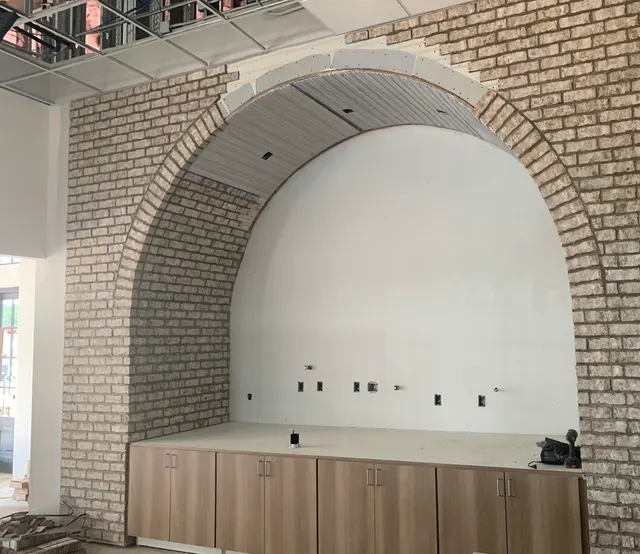
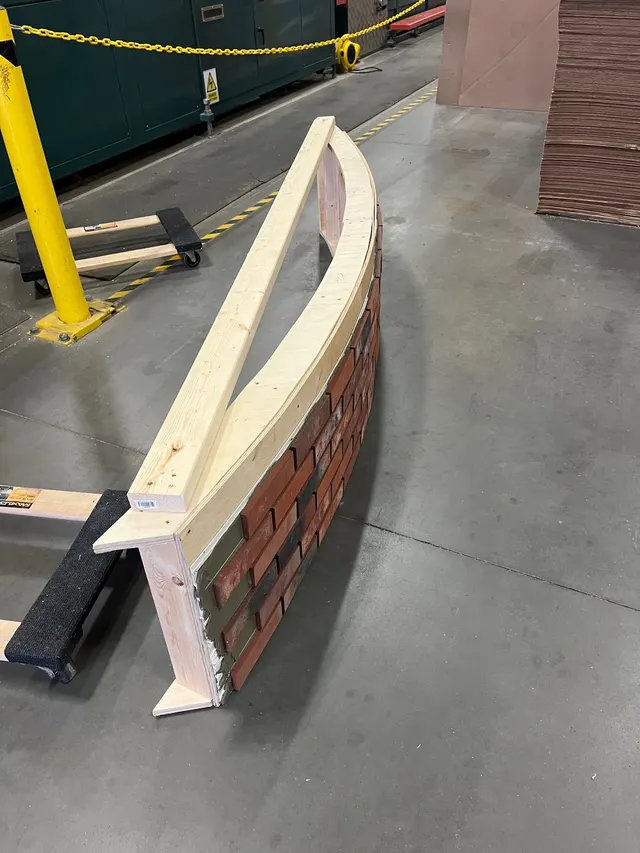
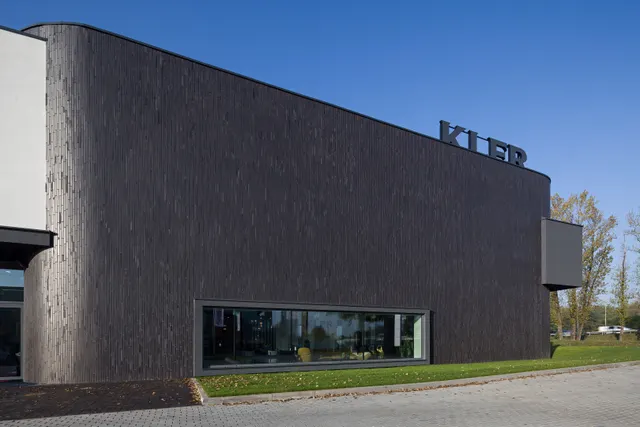
Shapes and features
- Interior and exterior walls
- Arches
- Barrel vaults
- Soldier courses
- Radius walls
Install over
- Wood framed walls
- Steel framed walls
- Concrete walls
- ICF (insulated concrete forms)
Fasteners and sheathing for each are on the install guides.
How it is made
Sawn, or extruded and cut green.
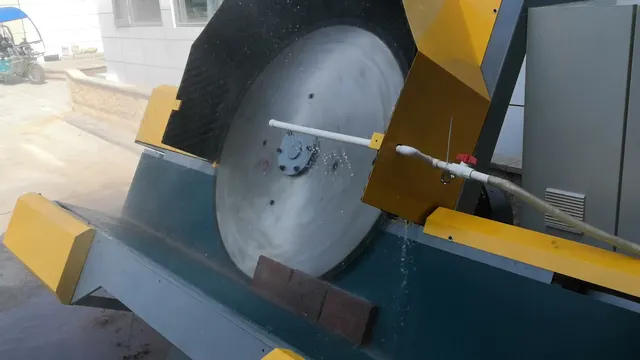
Saw cut thin brick
A full face brick is sawn into thin units, so the face and the body are those of the full brick. Cut brick has a smooth back.
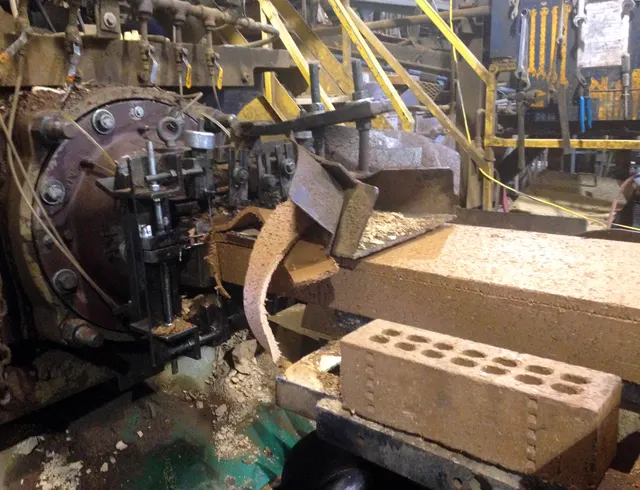
Extruded and cut green
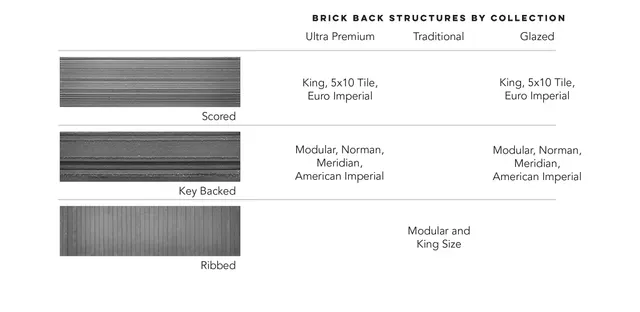
Clay is extruded in a column and cut to thin units before firing. Horizontal extrusion gives one back texture; vertical extrusion another.
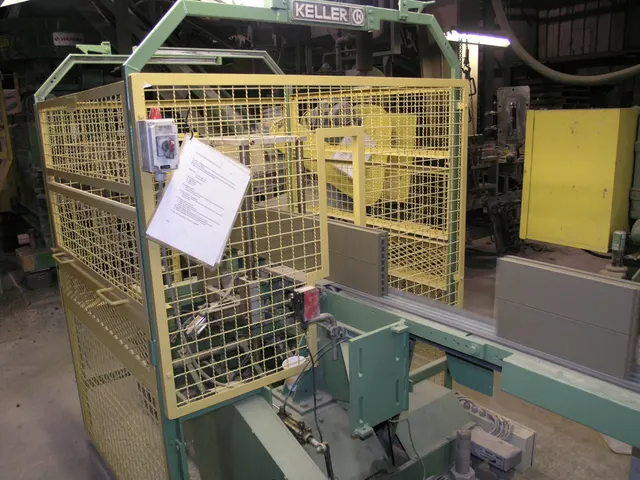
Fired
Thin units go through the kiln on cars like any other brick. A thin unit takes a fraction of the energy of a full brick to fire.
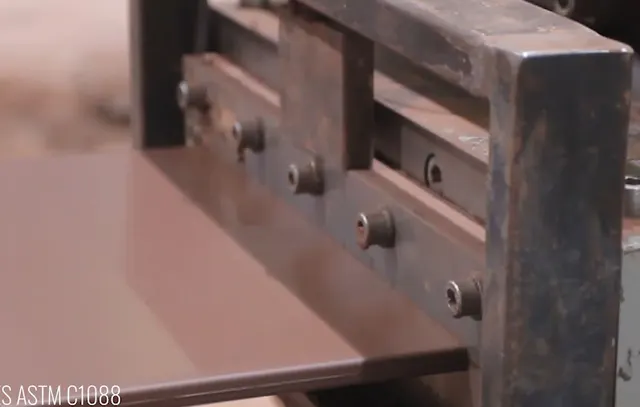
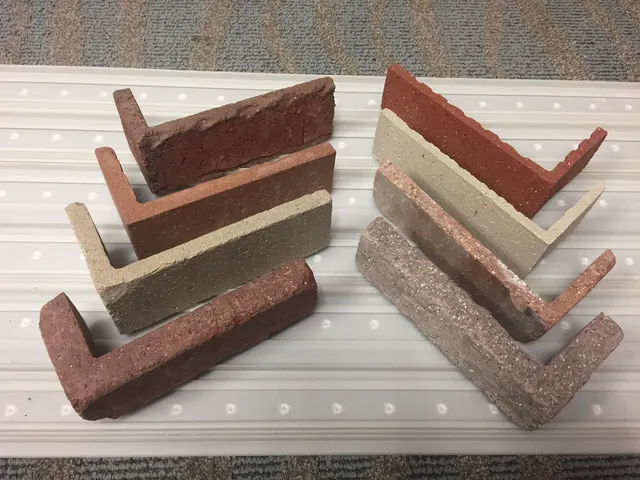
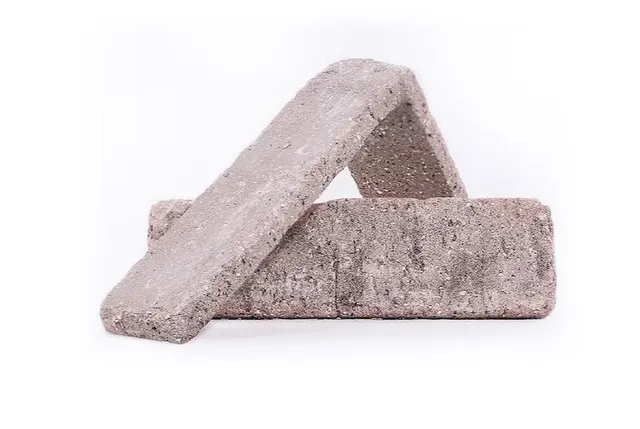
Every one of them goes on Speedymason Brick Lath: extruded, saw cut, concrete and manufactured thin brick, and glass or ceramic tile in brick sizes, from any maker.
Extruded thin brick comes in smooth, velour, wire cut and sand-faced textures and in square, chamfered and rustic edges, by collection. Tumbled units are cut brick with a worn edge and a smooth back.
Face brick versus thin brick
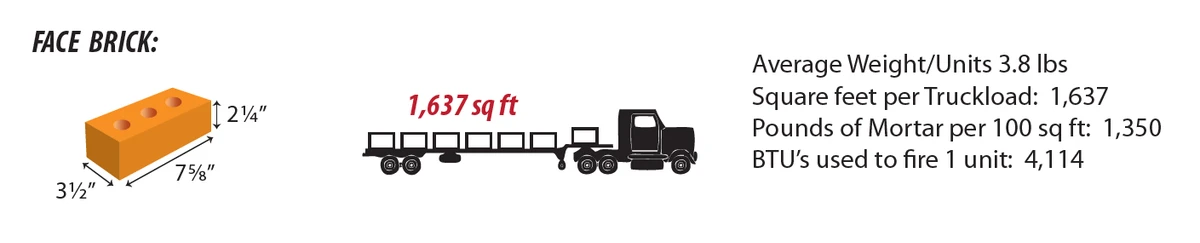
Face brick against thin brick, by the course figures.
| Measure | Face brick | Thin brick |
|---|---|---|
| Average weight per unit | 3.8 lb | 0.65 lb |
| Square feet per truckload | 1,637 | 9,572 |
| BTU to fire one unit | 4,114 | 907 |
| Material per unit | 62.19 cubic inches (ASTM C216 facing brick) | 10.72 cubic inches (ASTM C1088 thin brick), about 80 percent less |

The standard
ASTM C1088 covers the brick.
It is the unit standard for thin veneer brick. The wall behind it is governed by TMS 402-22 and the building code.
- A fired clay or shale unit for adhered or fastened veneer
- Less than 2-5/8 in. thick under the current edition, ASTM C1088-26
- Two grades, Interior and Exterior; specify Grade Exterior for outside walls
- Three types: TBS (standard), TBX (select) and TBA (architectural)
- Units past the code limits for area or weight need an engineered system
What the course recommends for the wall
- Wood or steel stud backing with deflection held to L/360
- A water-resistive barrier on exterior walls
- The wall stays inside the TMS 402-22 adhered veneer limits
The TMS 402-22 limits and the four ways to install thin brick.
Mortar and the 2024 code
The 2024 International Building Code requires a polymer-modified setting bed for adhered veneer: polymer-modified thin set meeting ANSI A118.4 or A118.15. The joints between the bricks are a separate material, grouting/pointing mortar, which may be Type S or Type N.
Source: Masonry and Hardscapes Association, What to know about code changes for masonry veneer.
Expansion joints
- Expansion joints no more than 18 ft apart vertically or horizontally in the course material; the Speedymason installation guide uses 15 ft. Confirm spacing with the architect and local code.
- Joints should be square in shape.
- Backer rod 25 percent wider than the joint.
- A flexible sealant colored to match the brick.
Sizes
Four common sizes.
Face size, thickness and how the courses work out on a Speedymason panel. Any maker's brick in these sizes goes on Brick Lath, and other sizes course too; the installation guide lists them.
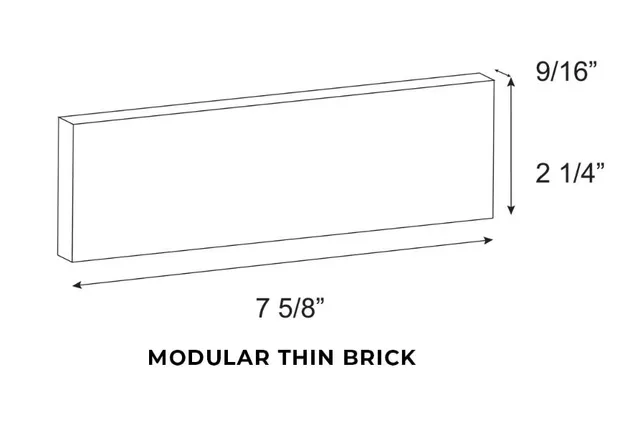
Modular
7-5/8" x 2-1/4", 9/16" thick
3 bricks and 3 joints = 8 in.
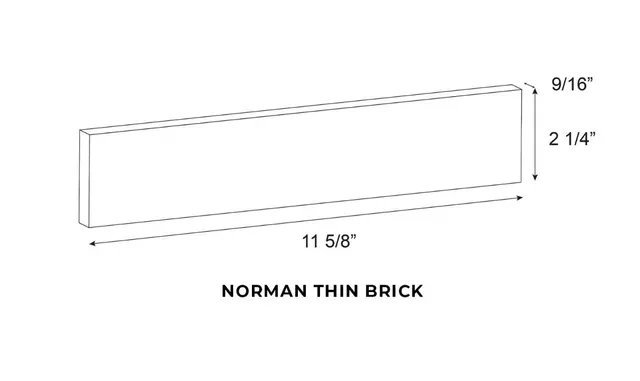
Norman
11-5/8" x 2-1/4", 9/16" thick
3 bricks and 3 joints = 8 in.
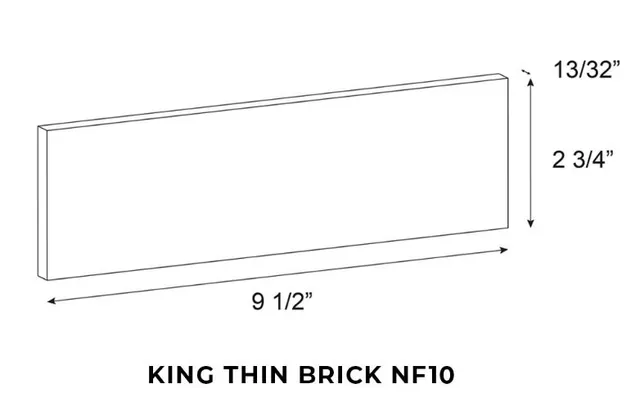
King
9-1/2" x 2-3/4", 13/32" thick
5 bricks and 5 joints = 16 in.
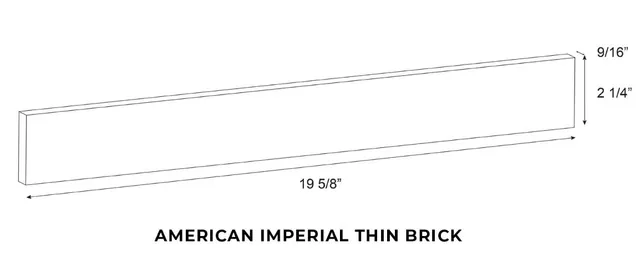
Utility
11-5/8" x 3-5/8", 1/2" thick
4 bricks and 4 joints = 16 in.
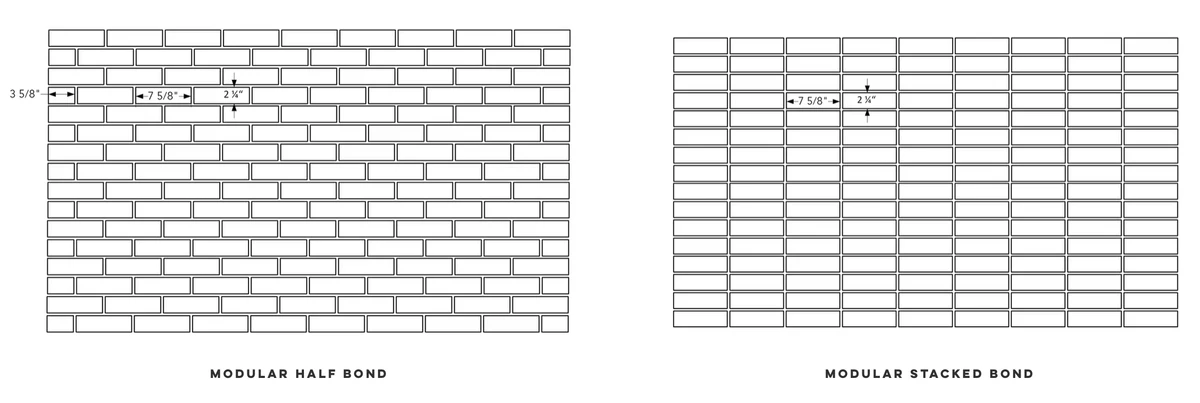
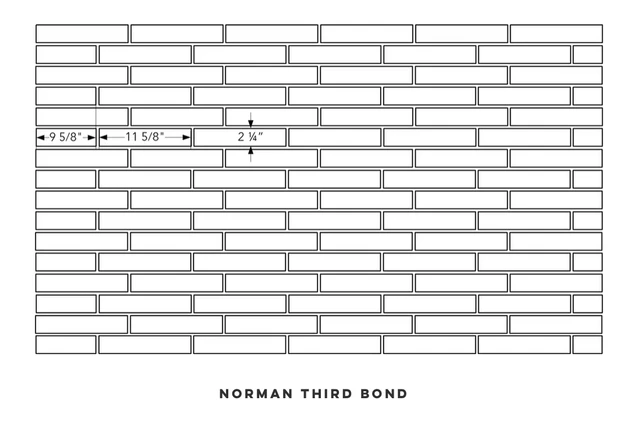
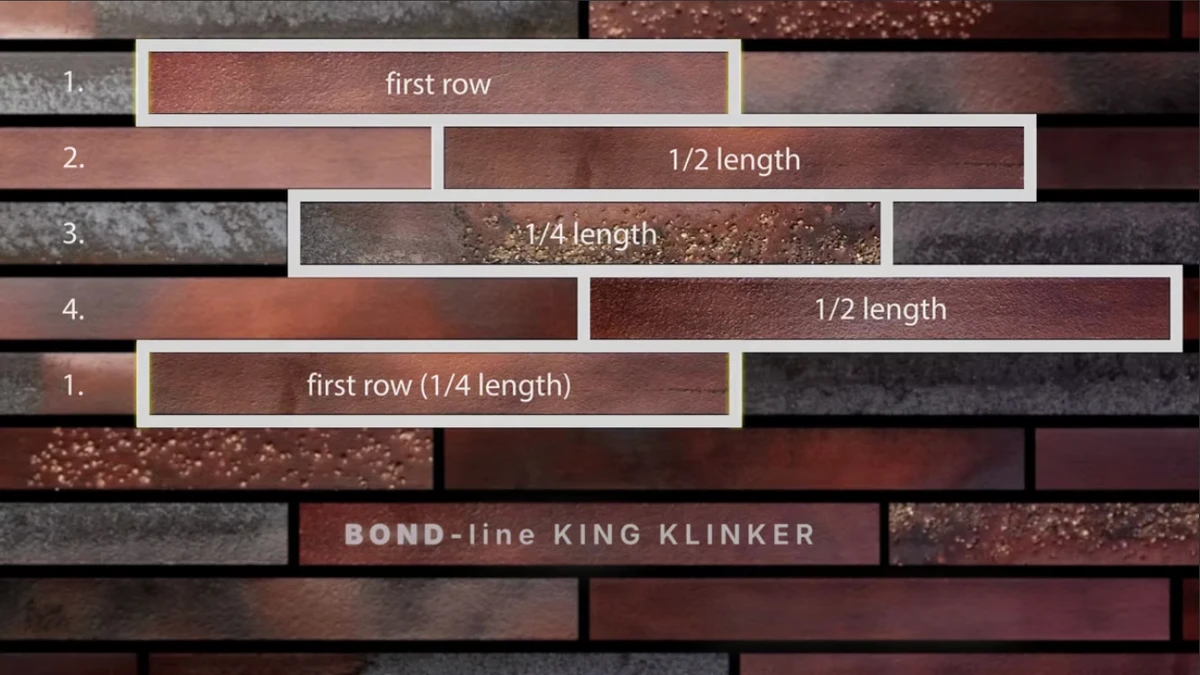
Bonds in the course: running bond, modular half bond, modular stacked bond, norman third bond, soldier course.
Questions
What architects ask in the course.
Does Speedymason Brick Lath work with any thin brick?
Yes. Brick Lath takes any thin brick from any maker: extruded clay, saw cut from face brick, concrete and manufactured thin brick, and glass or ceramic tile in brick sizes, from 3/8 to 1-1/2 in. thick. Speedymason sells Vandersanden brick, and the panel does not care whose brick goes on it.
What is thin brick?
A fired clay unit made to ASTM C1088, the standard for thin veneer brick, less than 2-5/8 inches thick under the current edition. Speedymason Brick Lath takes units from 3/8 to 1-1/2 inches thick. It is sawn from a full brick or extruded and cut green before firing, and it is adhered to a backing rather than laid as a structural wythe.
How much lighter is thin brick than face brick?
In the course figures a thin brick weighs about 0.65 pounds against 3.8 pounds for a face brick, and a truckload covers about 9,572 square feet against 1,637.
Does ASTM C1088 set rules for the wall?
No. C1088 covers the brick unit itself. The wall falls under the adhered veneer provisions of TMS 402-22 and the building code, which limit the size and weight of the units and the height of the wall. Install practice is in ASTM C1935.
Does thin brick need polymer-modified thin set?
Yes. The 2024 International Building Code requires a polymer-modified setting bed for adhered veneer, meeting ANSI A118.4 or A118.15, and the Speedymason installation guide requires polymer-modified thin set on every wall. The joints between the bricks take grouting/pointing mortar, Type S or Type N.
Can thin brick go on arches and radius walls?
Arches, barrel vaults, soldier courses and radius walls are all shown in the course as thin brick applications. Ask Speedymason for a detail before you design one on the panel.
Next step
Talk to Speedymason.
Tell us what wall you have and when you need it done. We will point you to the nearest distributor and the right system.