Why choose Speedymason
Eight things a mason notices on the wall.
Speedymason lath is a composite panel with the guide legs built in. These are the differences crews report, in the order they meet them.
The biggest saving is time
The wall goes up sooner, and everything behind it moves up with it.
Price per square foot is where the conversation starts. Hours on the wall are where the money is, for the mason who sets it and for everyone waiting on it.
For the mason
20 to 30%
more work a year with the same crew
Nothing waits on a scratch coat to cure, and there are no lines to snap. The coursing is molded into the panel, so brick goes on the hour the panel is up. A job that takes fewer hours leaves room for the next one, on the same payroll, and the extra jobs are where the profit is.
Speedymason's own field figure. The calculator's benchmark run lands at about 34% more jobs a year against full brick and about 134% against metal lath, with the rest of each job counted at full length.
For owners, architects and general contractors
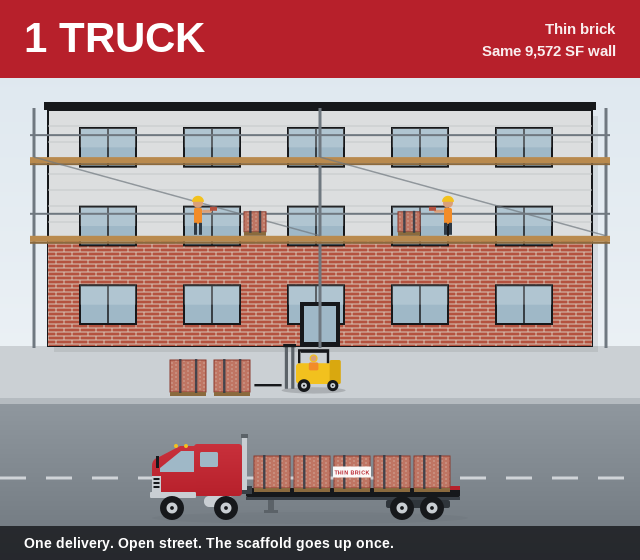
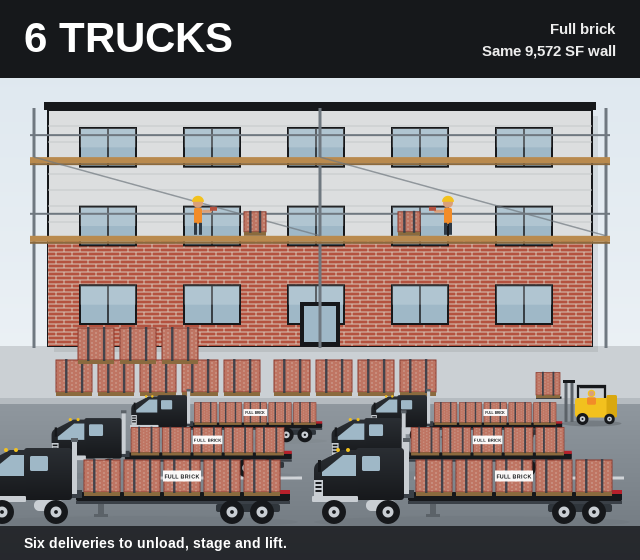
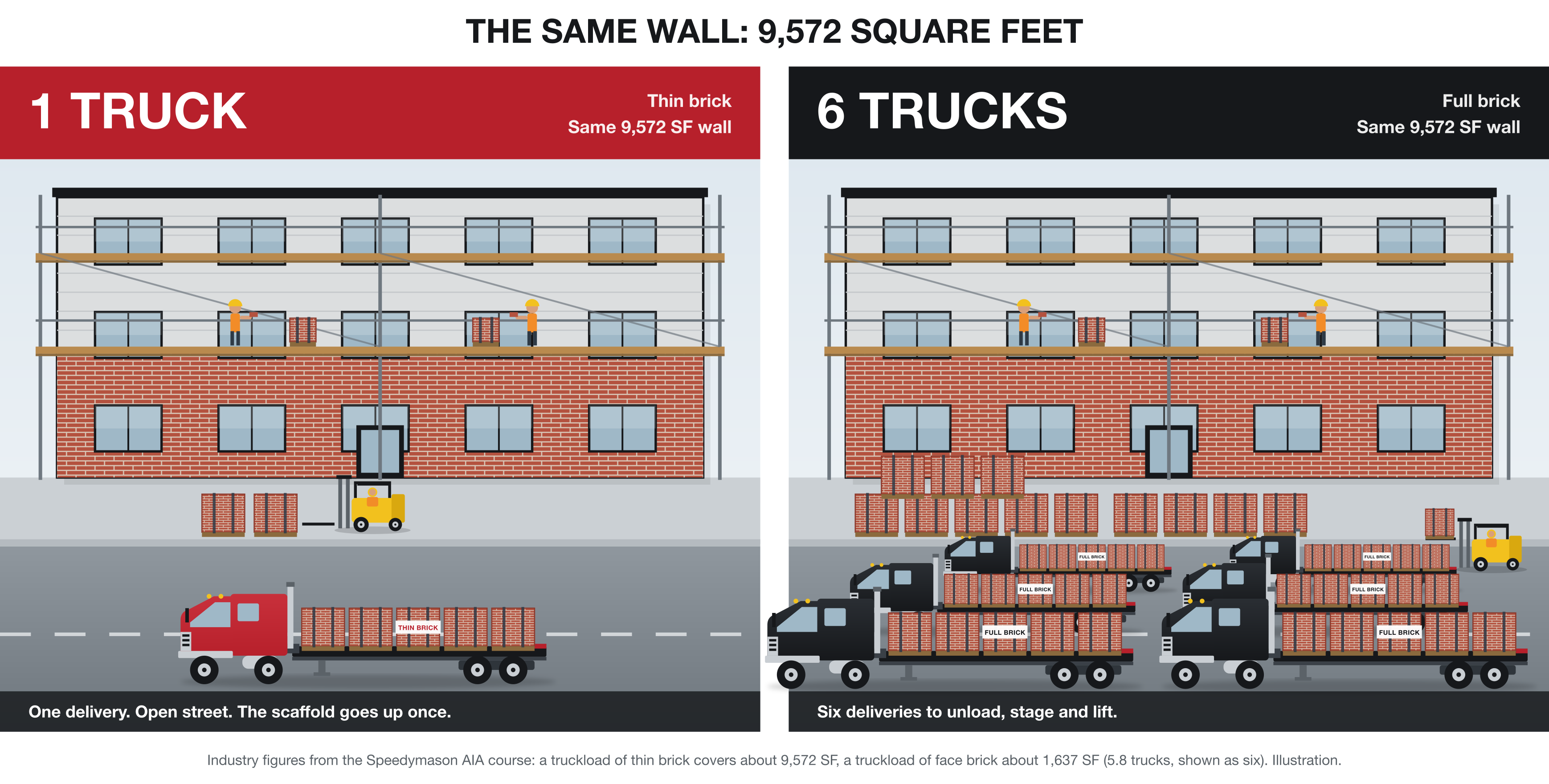
1 truck
of thin brick covers what takes five or six truckloads of full brick
The schedule compresses. A wall that finishes in fewer working days hands the site to the next trade sooner, and the scaffold is set once. Less lands on the site too: fewer deliveries, less to stage and lift, and no brick ledge or lintels to build first.
Industry figures from Speedymason's AIA course: a truckload of thin brick covers about 9,572 square feet, a truckload of face brick about 1,637.
Put your own job in hours and days Labor hours first, then cost, all six systems side by side.
- 01
Guide legs course the brick
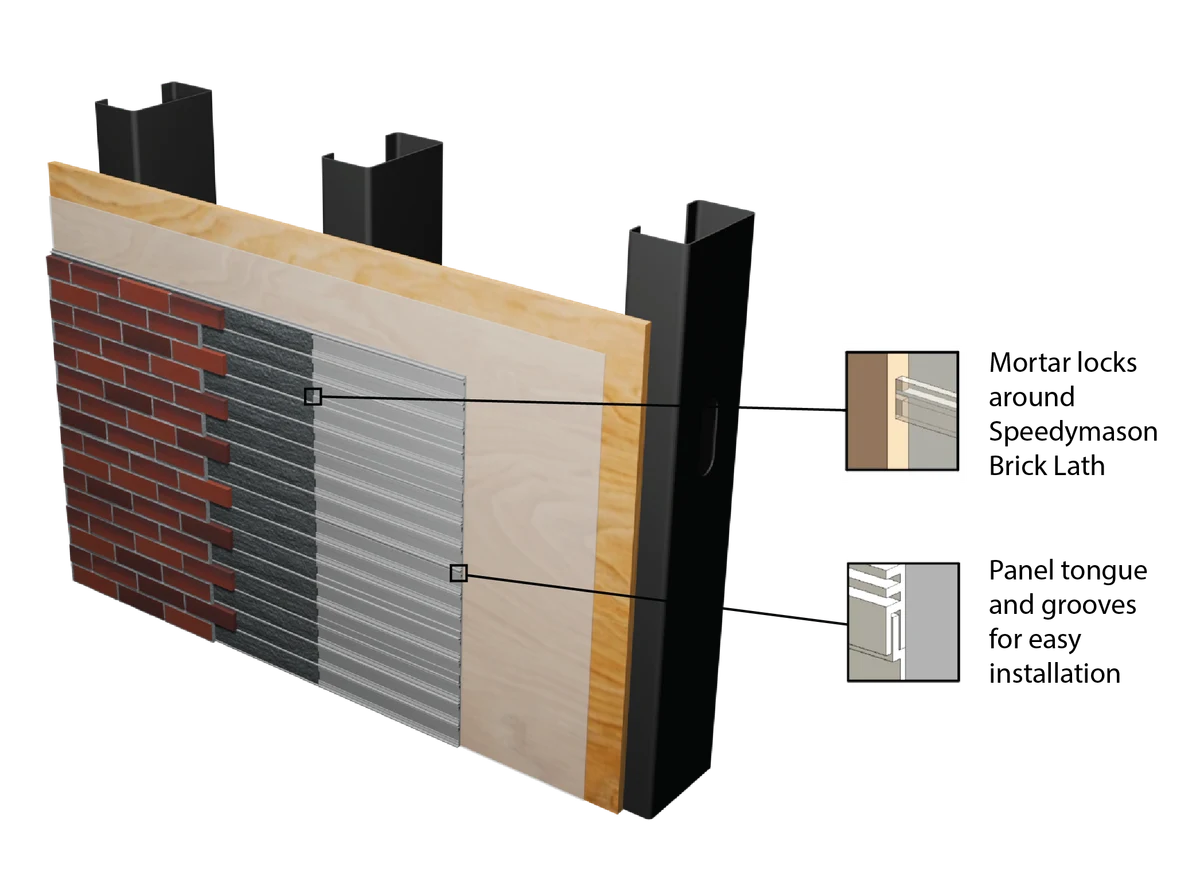
Preset guide legs lock in the bed joint and keep every course level. You do not snap lines, and the brick does not sag.
- 02
Even mortar bed depth
The guide legs meter the mortar depth behind every thin brick, so each brick gets full coverage and a locked-in bond.
- 03
Lighter and safer to handle
A 16 by 48 inch panel weighs about 3 lb and a 16 by 96 about 6 lb, polypropylene, with softer edges than metal lath.
- 04
No tin snips or grinding
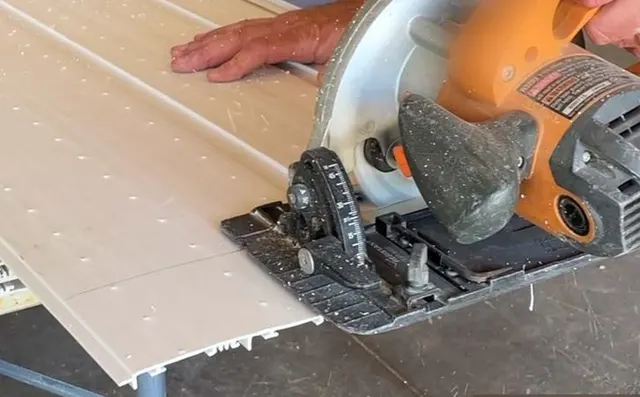
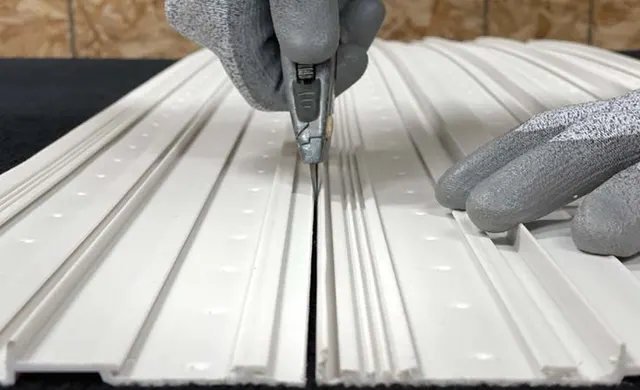
It cuts clean with a circular saw and a utility knife, so there are no tin snips and no hot metal.
- 05
No waiting on a scratch coat
The scratch coat does not have to cure first. Veneer goes on the same day, and the scaffold is not reset.
- 06
Will not corrode
Polypropylene, so nothing in the panel rusts.
- 07
Built-in vapor drainage
Drainage dimples on the back of every panel, 0.18 perms on ASTM E96, and a factory-applied rainscreen when the project needs one.
- 08
Takes up an uneven wall
The mortar can be built out past the face of the panel to smooth minor framing and substrate imperfections. A metal panel system follows whatever the wall does.
- 09
Full bed of mortar
Exterior guided lath puts a full bed of mortar behind the brick, unlike panels that set the brick in adhesive, and mortar bonds mechanically to the panel.
Side by side
Speedymason against the other ways to put brick on a wall.
Speedymason's own comparison of its lath with metal lath and a scratch coat, cement board, metal panel systems for thin brick, and full brick.
| On the wall | Speedymason | Metal lath | Cement board | Metal panel systems | Full brick |
|---|---|---|---|---|---|
| Mortar bonds mechanically to the lath | Yes | Yes | Yes | Yes | Yes |
| Full bed of mortar behind the veneer | Yes | Yes | Yes | No | Yes |
| Mortar bed can take out a wavy wall | Yes | Yes | No | No | Yes |
| Brick and stone on the same system | Yes | Yes | Yes | No | Yes |
| No scaffolding to reset | Yes | No | Yes | Yes | Yes |
| No snapping lines or setting leads | Yes | No | No | Yes | No |
| Thin brick supports built in | Yes | No | No | Yes | No |
| Will not corrode | Yes | No | Yes | No | Yes |
| Tongue and groove panels | Yes | No | No | No | No |
| Drainage built in | Yes | No | No | No | Yes |
| Cuts with a circular saw and utility knife | Yes | No | Yes | No | No |
| 50-year panel warranty* | Yes | No | No | No | No |
- * 50-year panel warranty: Speedymason’s warranty on its own panel; see the testing and warranty page for its terms.
- Metal panel systems here are stamped steel panels that hold the brick with adhesive. Products differ, so check the maker’s data for the one you are comparing.
- Cement board here is cement backer board screwed to the wall, with a line snapped for every course, each brick back-buttered with thin set and the joints pointed afterward.
System by system
Against the three ways brick goes on a wall today.
One page for each: what Speedymason replaces, point by point, with the chart narrowed to the rows that differ.
-
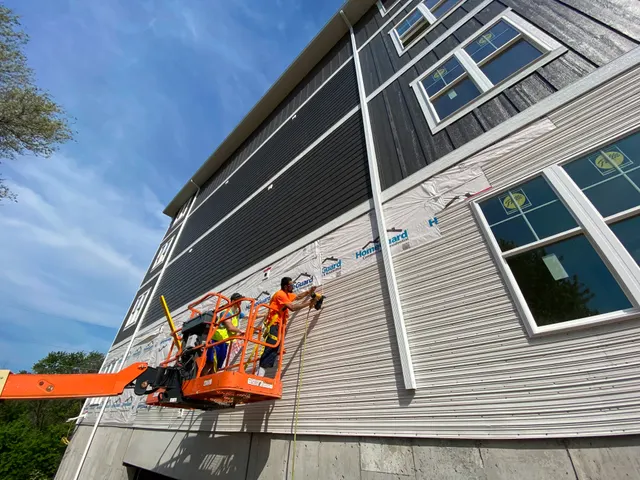
Over metal lath
Speedymason over metal lath and a scratch coat.
Safe and easy to handle. Guide legs course the brick or block. The right thin set depth every time.
-

Over metal panel systems
Speedymason over metal panel systems.
Safe and easy to handle. Simple to cut. Takes out a wavy wall.
-
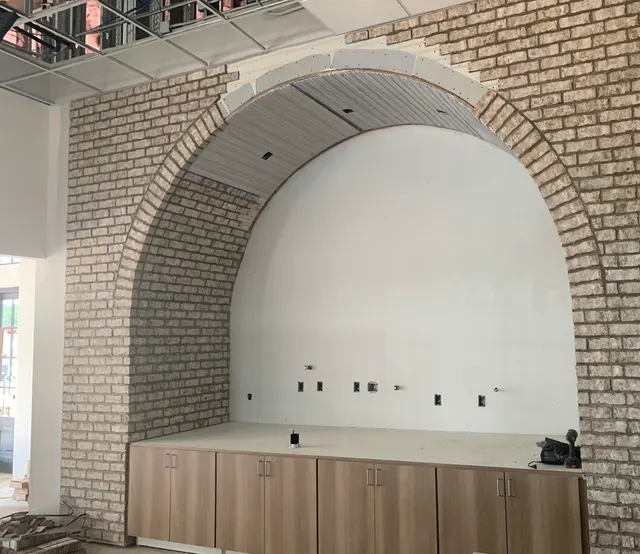
Over full brick
Thin brick on Speedymason over full brick.
Less load on the structure. Shapes full brick makes hard. A fifth of the brick.
Watch
See it on a wall.
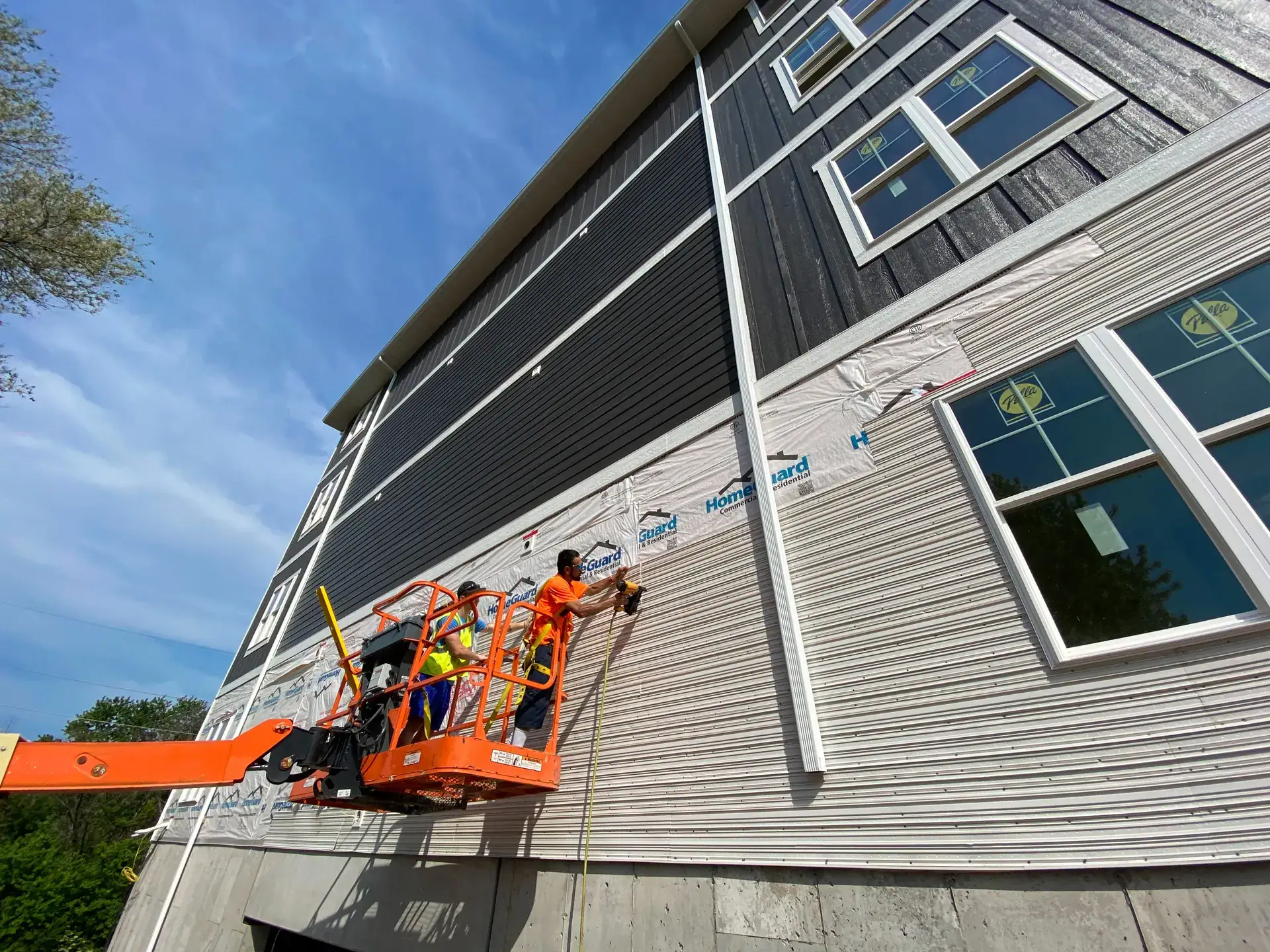
The overview video walks through all four steps on a real wall, from the first panel to the struck joints.
The method
Four steps, and nothing waits to cure.
- 1Fasten the panel to the sheathing.
- 2Trowel polymer-modified thin set over the guide legs.
- 3Set the bricks on the guides.
- 4Bag the joints with grouting/pointing mortar and strike.
From the distributors
What the counter hears from contractors.
Distributors who stock Speedymason, in their own words.
-
“Speedymason consistently responds to inquiries in a timely manner and is proactive in communicating material lead times. Every order has been accurately pulled, staged, and shipped, with deliveries arriving on schedule and all materials received in excellent condition.
The team provides samples and product literature promptly upon request and offers a comprehensive AIA continuing education program focused on thin brick systems and construction methods.
Contractors have experienced installation time reductions of approximately one-third by eliminating the need to wait up to 48 hours for traditional metal lath and scratch coat systems to cure. Speedymason's composite panels are faster and easier to cut and install than conventional metal panel thin brick systems. Additionally, the composite material is guaranteed not to corrode, providing long-term durability.
During winter construction, contractors have successfully installed Speedymason panels over window and door openings to improve installation efficiency while somewhat protecting interiors from the elements until windows and doors are ready for installation. When windows and doors arrive, they simply cut the Speedymason out from the openings.
Speedymason has had a positive impact on our business by improving profit margins, increasing sales, and expanding our product offerings. Its faster installation process benefits installers, project owners, and general contractors alike by reducing labor costs and shortening overall project schedules.”
Adam Marlman, CEO, Altiers Architectural Products
-
“Speedymason delivers strong, responsive sales support with fast quoting, well-structured trainings, and consistently professional resources like samples, presentations, and AIA courses. Their sales team shows flexibility, confidence, and deep product knowledge, proving highly effective during joint trainings and events.
Contractors consistently praise Speedymason for its simplicity, minimal learning curve, and major labor-time savings. After seeing the installation firsthand, both personally and across multiple crews, it is clear that installers quickly grasp the process and appreciate the efficiency it brings. Many contractors actively look for opportunities to use Speedymason on more projects because it boosts productivity without sacrificing quality.
Its ease of installation and dependable results make it a standout solution in the masonry industry. Speedymason has strengthened our lineup by expanding what we can offer and making it easy to support.”
David Trussoni, Sales Manager, County Materials
-
“Speedymason has been a great partner of Acme Brick Company. The Speedymason Lath system is a solutions-based product that saves our customers time and money, and best of all, creates a stunning finished project.
Feedback from our customers indicates that these panels are easy to trim and install on the jobsite while helping ensure proper alignment of the brick and stone veneer. Furthermore, Speedymason provides firsthand training to our associates so they can confidently demonstrate the benefits of their system, most importantly the significant time savings compared to traditional lath installation. We continue to be impressed by their timely shipping and reliable support.”
Dustin Nash, Purchased Products Manager, Acme Brick Company
-
“At Reuther Material Company, we have spent 100 years serving the masonry industry, and during that time we have seen a lot of products and systems come to market. What has impressed us about Speedymason is that they have developed a system that provides real, practical value to the contractor.
The Speedymason system helps contractors work more efficiently, improve consistency, and ultimately get more accomplished in the field. In an industry where skilled labor, productivity, and controlling costs continue to be major challenges, we believe products that help a contractor do more without sacrificing the quality of their work bring tremendous value.
What has stood out to us just as much as the product itself is the support behind it. Their team has always been willing to answer questions, provide training, visit jobsites, and work directly with contractors to make sure they understand the system and are getting the most out of it.”
Douglas Ruether, Vice President, Reuther Material Company
-
“Speedymason fills a tremendous void in the masonry business. Their product is easy enough for do-it-yourselfers to use, yet designed to handle the commercial market as well. Thin veneer is a major basis of design in today's architecture, and this works!”
Brady Lowther, Senior Sales Executive, Central Supply Company of West Virginia
Questions
What contractors ask first.
What is Speedymason lath made of?
Speedymason panels are made from polypropylene and contain no fiberglass. They are lighter than metal lath with softer edges, and they do not corrode.
How do you cut Speedymason lath?
With a circular saw and a utility knife, so there are no tin snips and no hot metal.
Does Speedymason lath need a scratch coat?
Outside, yes, and the difference is the wait. The polymer-modified mortar goes over the panel and the brick, block or stone is set the same day, with no cure time in between. Interior stone installations need no scratch coat.
Does the mortar bond to Speedymason lath?
Yes. The thin set keys in behind each guide leg and bonds mechanically to the panel, and exterior guided lath puts a full bed of it behind the brick.
What goes between the bricks?
Grouting/pointing mortar, which may be Type S or Type N, bagged in after the bricks are set and struck once it firms up. The thin set is the bed behind the brick, never the joint. Ultra-Speed is dry stacked, so it has no joint mortar at all.
See what it does to your labor hours.
Speedymason and Ultra-Speed against metal lath, metal panel systems and full brick.
Next step
Talk to Speedymason.
Tell us what wall you have and when you need it done. We will point you to the nearest distributor and the right system.