
Why choose Speedymason over full brick
Thin brick on Speedymason over full brick.
Full brick needs a ledge on the footing, steel lintels over every opening and a structure sized for the load. Thin brick on Speedymason adheres to the wall that is there, inside or out, with about a fifth of the clay, and it goes around curves and up soldier courses that slow a full brick crew down.
On the wall
What changes on the wall.
Point by point, what a crew gives up by staying with full brick, in the order it comes up on a job.
-
 01
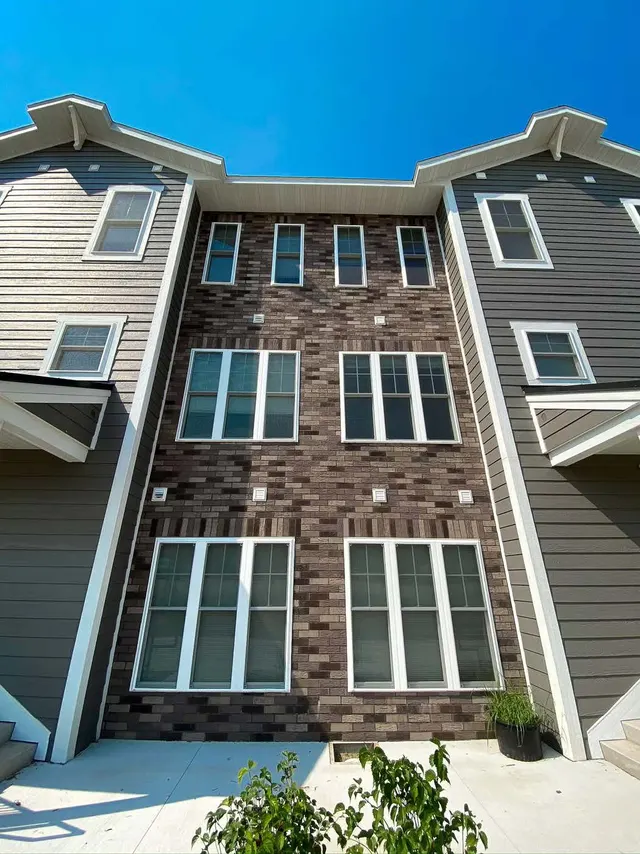
Less load on the structure
Thin brick cuts the wall’s weight so far that the brick ledge on the footing and the lintels over the openings go away.
-
 02
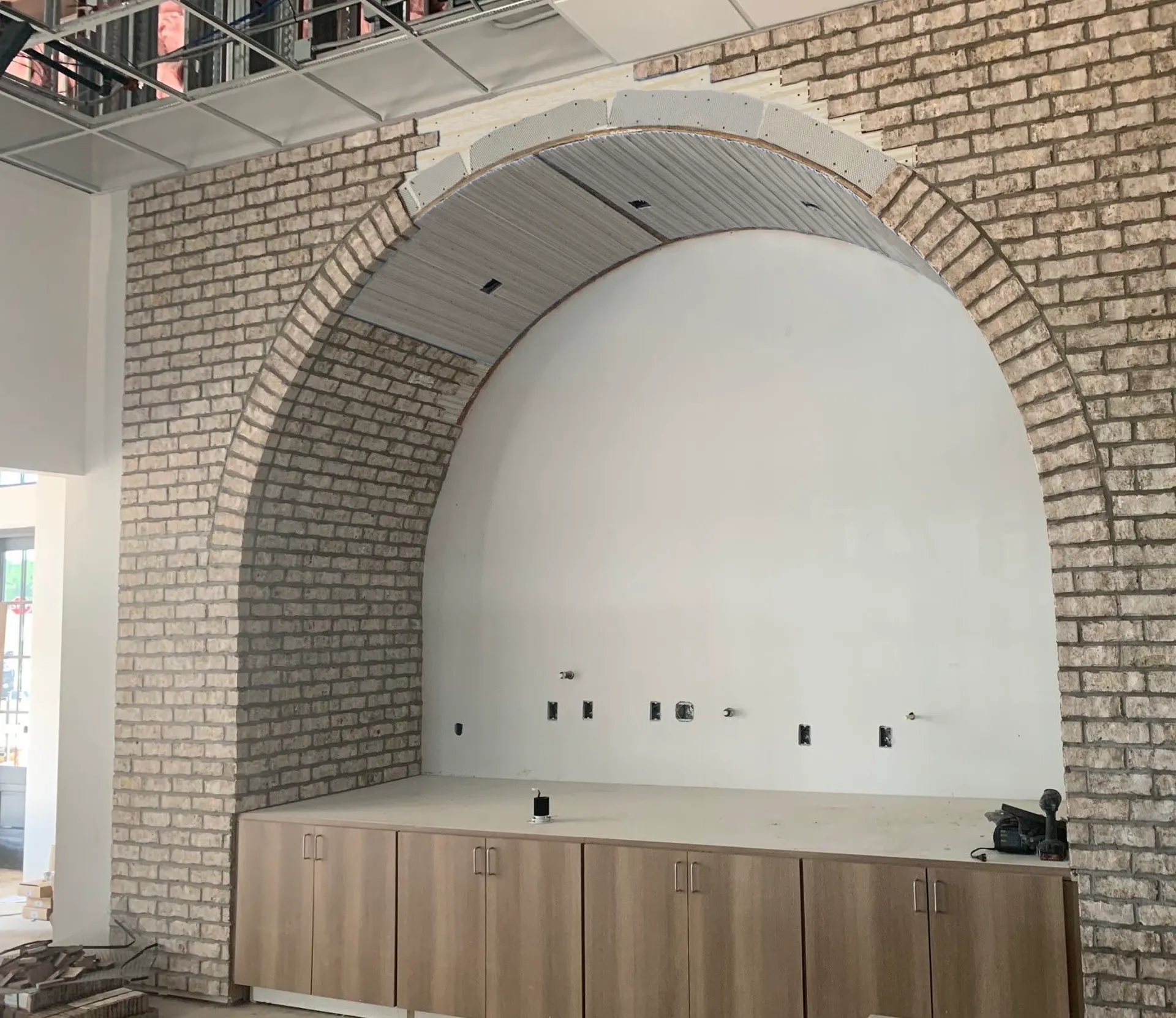
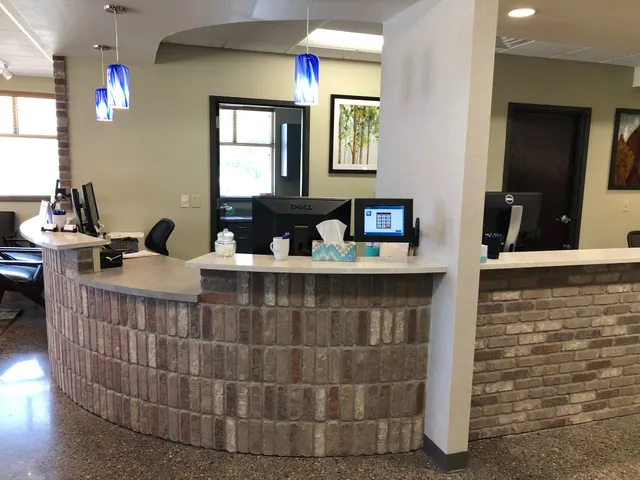
Shapes full brick makes hard
Curved walls, barrel vaulted ceilings, soldier coursing and tight spaces all go faster and smoother in thin brick.
-
 03
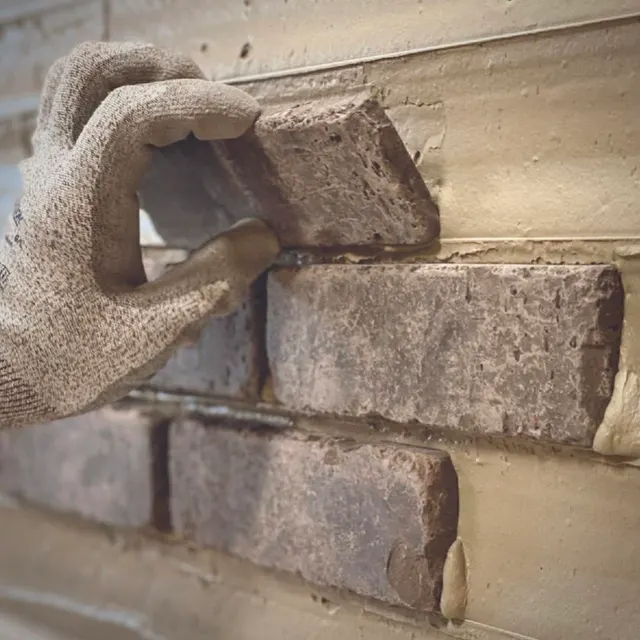
A fifth of the brick
A thin brick is about a fifth the thickness of a full brick: a fifth of the clay to fire, a fifth of the weight to ship, a fifth of the mortar, and a fifth of the transport emissions.
-
 04
New builds and retrofits
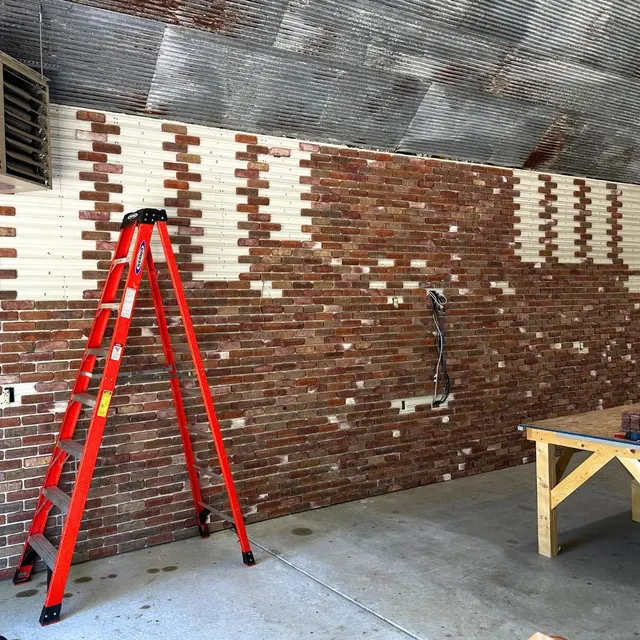
Full brick needs a structural ledge that most existing buildings do not have. Thin brick adheres straight to the wall with no structural change.
-
 05
Over the wall you have
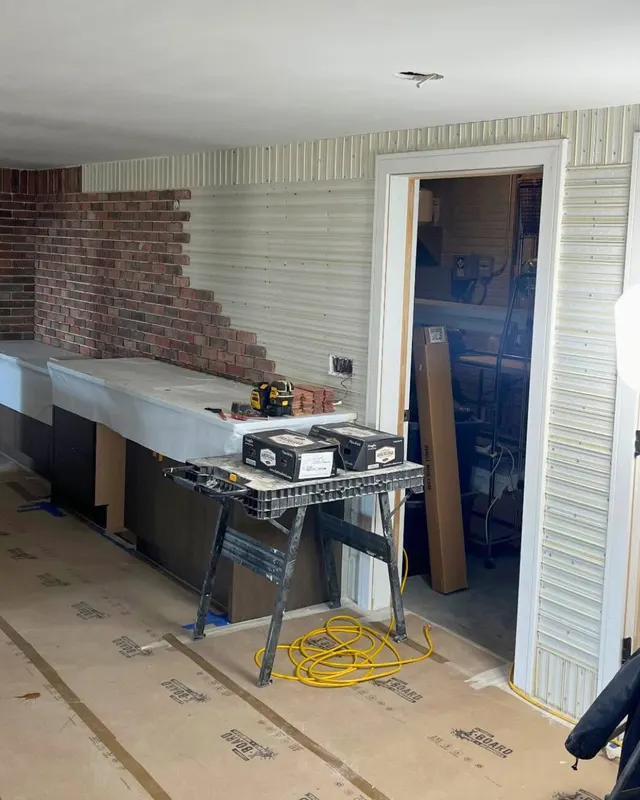
Outside, over CMU, ICF, wood or metal studs with sheathing, and EPS foam insulation. Inside, straight over drywall.
-
 06
Faster, with less freight
Thin brick on Speedymason installs faster than laid masonry and uses a fraction of the material, so labor and freight come down, and so does the load on the building.
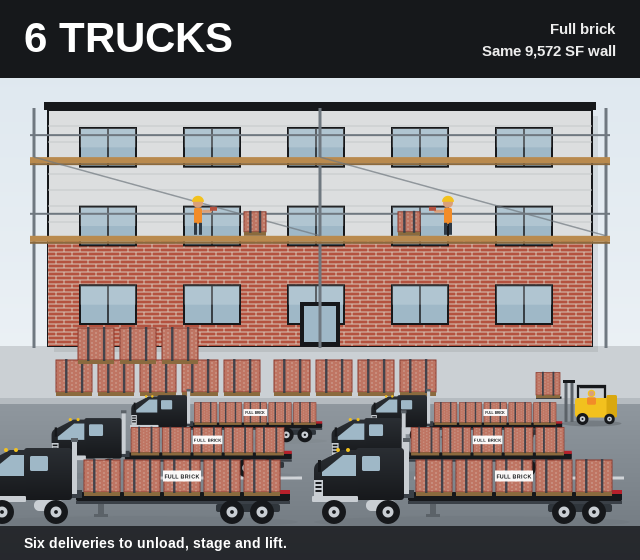
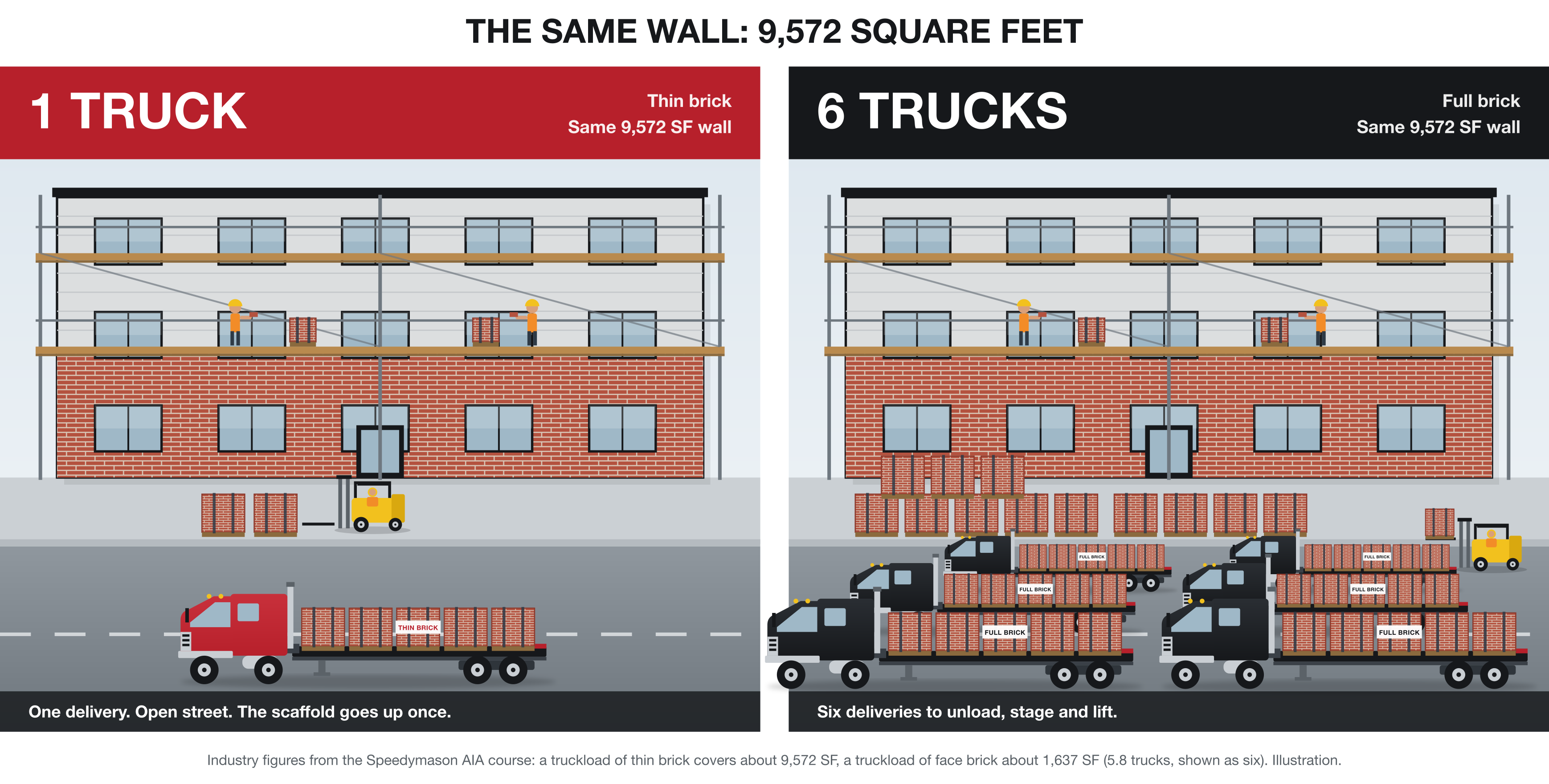
Speedymason’s calculator puts full brick at 10 square feet an hour against 13.35 for Brick Lath and 34 for Ultra-Speed, before the ledge and the lintels, and before the freight. The calculator charges full brick a $5 per square foot baseline for those structural components, and nothing to the panel systems. One truckload of thin brick covers about as much wall as five or six truckloads of full brick, 9,572 square feet against 1,637 in the industry figures Speedymason teaches. Enter your own numbers below.
Side by side
Speedymason and full brick, where they differ.
From Speedymason's own comparison chart. Rows the two systems share are left out.
| On the wall | Speedymason | Full brick |
|---|---|---|
| No snapping lines or setting leads | Yes | No |
| Thin brick supports built in | Yes | No |
| Tongue and groove panels | Yes | No |
| Cuts with a circular saw and utility knife | Yes | No |
| 50-year panel warranty* | Yes | No |
- * 50-year panel warranty: Speedymason’s warranty on its own panel; see the testing and warranty page for its terms.
A curve full brick would not take. Brick on a wood frame wall, no ledge. 
Four stories on an ICF wall.
“Their team has always been willing to answer questions, provide training, visit jobsites, and work directly with contractors.”
The biggest saving is time
The wall goes up sooner, and everything behind it moves up with it.
Price per square foot is where the conversation starts. Hours on the wall are where the money is, for the mason who sets it and for everyone waiting on it.
For the mason
20 to 30%
more work a year with the same crew
Nothing waits on a scratch coat to cure, and there are no lines to snap. The coursing is molded into the panel, so brick goes on the hour the panel is up. A job that takes fewer hours leaves room for the next one, on the same payroll, and the extra jobs are where the profit is.
Speedymason's own field figure. The calculator's benchmark run lands at about 34% more jobs a year against full brick and about 134% against metal lath, with the rest of each job counted at full length.
For owners, architects and general contractors
1 truck
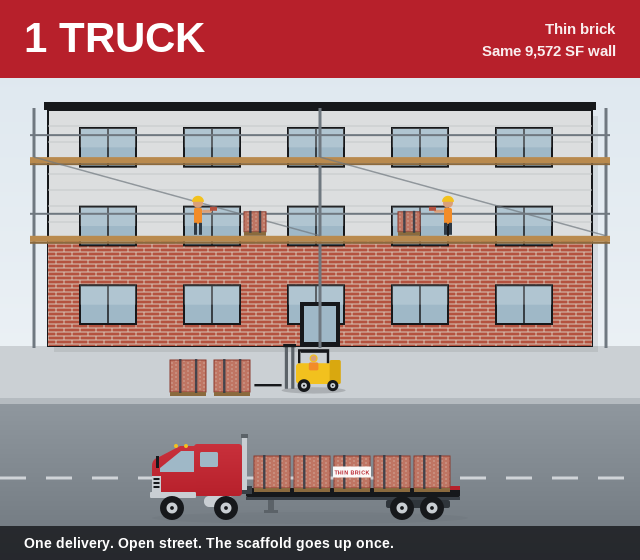
of thin brick covers what takes five or six truckloads of full brick
The schedule compresses. A wall that finishes in fewer working days hands the site to the next trade sooner, and the scaffold is set once. Less lands on the site too: fewer deliveries, less to stage and lift, and no brick ledge or lintels to build first.
Industry figures from Speedymason's AIA course: a truckload of thin brick covers about 9,572 square feet, a truckload of face brick about 1,637.
Put your own job in hours and days Labor hours first, then cost, all six systems side by side.
Run your own job through the calculator.
Your square footage, your labor rate and your prices. Speedymason, Ultra-Speed, full brick and the rest, side by side, with labor hours.
Also
The other comparisons.
Next step
Put it on your next wall.
Tell us the wall, the brick and the schedule. We will name the nearest distributor and the right panel.