
Problems and fixes
What goes wrong with thin brick, and what prevents it.
Six things that go wrong on thin brick walls. For each one: what causes it, what in the Speedymason system and the installation guide prevents it, and what to do where it has already happened.
112.5 psf
overload held, no failure, ASTM E330
15 ft
control joint spacing in the installation guide
5 to 10
days after bagging to clean
50 yr
warranty on the composite panel
-
 01
Brick coming off the wall
A hollow sound behind a brick, then a brick in the mulch.
Why it happens
A starved bed. The brick was spot bonded outside, the setting material skinned over before the brick went on, the panel had dust on it, or the wrong material was used behind the brick.
What prevents it
- A full bed of polymer-modified thin set behind every brick outside. The guide legs meter the depth, so the bed is the same behind the first brick and the last.
- Press each brick in from the bottom until thin set squeezes out around it. Squeeze-out is the sign of full contact.
- The thin set keys in behind each guide leg, so the bond to the panel is mechanical, not just adhesive.
- A clean, dry panel. Wipe dust off before the thin set goes on.
If it has already happened
Pull the loose brick, scrape the old bed off the panel and the brick, and reset it in fresh thin set. One loose brick is a bed problem at that brick. A run of them is a material or weather problem on that day, and the rest of that run should be sounded.
-
 02
Freeze-thaw damage
Faces of brick flaking or popping off after a winter or two, mostly near grade and under sills.
Why it happens
Water in the brick or behind it froze. Either the brick absorbs too much water for the climate, or water got in behind the veneer and had no way out.
What prevents it
- Specify thin brick made to ASTM C1088 Grade Exterior for any outside wall in a freezing climate. The grade is the unit's freeze-thaw rating, and it is the brick maker's call, not the panel's.
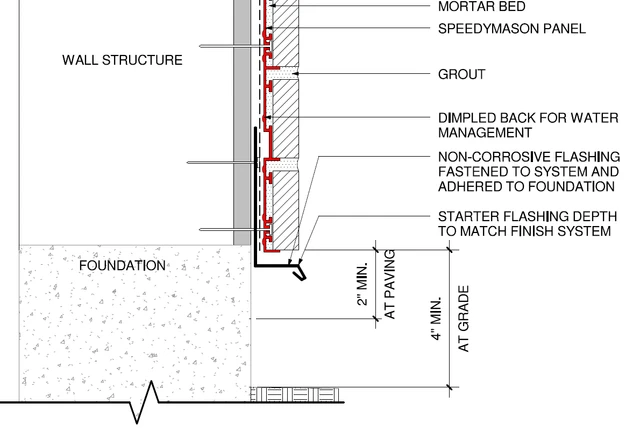
- Keep the drainage path open: the water-resistive barrier behind the panel, the dimples on the back of the panel, base flashing with a drip edge, and a weep at the bottom. Water that gets in has to get out.
- The panel itself is polypropylene. It does not take on water and it does not rust.
- Do not seal water in. If a sealer is used, it is the one the brick maker names, applied after the wall has dried out.
If it has already happened
Spalled brick are replaced one at a time in fresh thin set. Before they go in, find out why the wall was wet: a missing drip edge, a blocked weep, a sill without a pan, or a brick that was never rated for the climate.
-
 03
Efflorescence
A white, powdery bloom on the face of the brick or the joints, usually in the first year.
Why it happens
Water moving through the mortar and the brick dissolves salts and carries them to the face, where the water evaporates and the salt stays. The Brick Industry Association covers the mechanism in Technical Note 23A. It takes three things at once: salts, water and a path to the surface.
What prevents it
- Keep the materials dry before they go on the wall. Brick on pallets off the ground and covered, bags of thin set and grouting/pointing mortar under cover.
- Cover the top of the wall at the end of each day until the cap or the flashing is on.
- Get the water management right, so water that enters the wall drains out the bottom instead of sitting behind the brick. The water page below walks through it.
- Clean no sooner than 5 days and no later than 10 days after bagging, with the cleaner the brick maker names, and do not flood the wall.
If it has already happened
Let it dry, then dry brush it. Most efflorescence weathers off on its own once the wall has dried out and the construction water is gone. What keeps coming back points to water still getting in.
-
 04
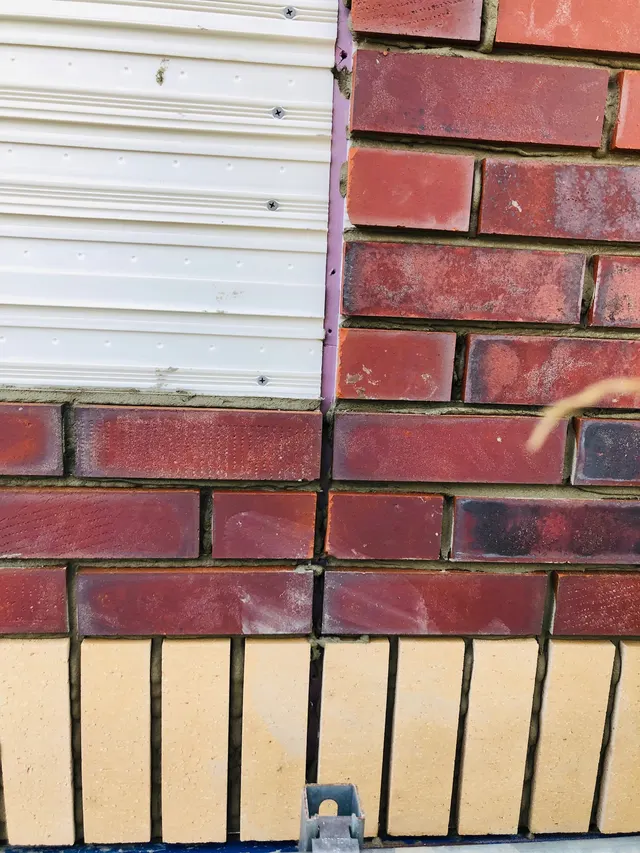
Cracked joints
A crack running through the mortar joints, often in a straight line or at a corner of an opening.
Why it happens
Movement with nowhere to go. Brick and mortar move with temperature and moisture, the building moves as it settles, and a long wall with no control joint cracks where it wants to.
What prevents it
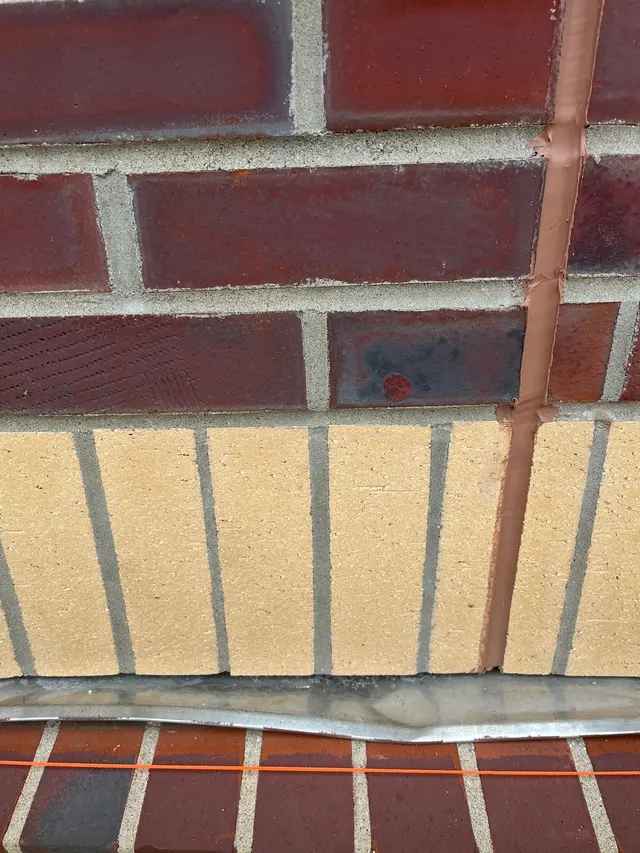
- Control joints every 15 feet, or as the architect or the code calls out, at the wall's own movement joints and anywhere the panel cannot reach the studs. The installation guide puts the responsibility on the installer if the drawings are silent.
- A square joint with backer rod a quarter wider than the gap and a flexible sealant colored to the brick.
- A full bed behind the brick bonds to the panel, and once it cures it holds the panel so it does not expand and contract. Speedymason's expansion and contraction sheet explains it.
- Panels butted within 1/8 inch and no closer than a dime, with the seams staggered, so no two panel ends line up.
If it has already happened
Rake out the cracked joint and repoint it with grouting/pointing mortar. A crack that follows one line across the wall is a missing control joint. Cut one in there and seal it.
-
 05
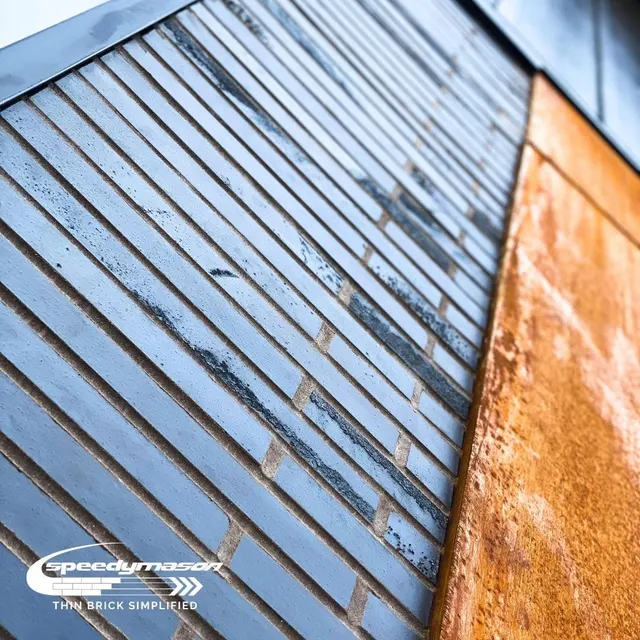
Courses out of level, brick sagging
A course that wanders, or a brick that slid down the wall before the bed set.
Why it happens
On wire lath a mason snaps lines and sets leads, and a brick in a wet bed can slide until the bed takes hold.
What prevents it
- The guide legs molded into the panel set the course height and hold each brick where it is placed. There are no lines to snap and nothing for the brick to slide down onto.
- Set the starter panel from the layout. Every course above it follows the panel.
- Tongue and groove edges carry the coursing level across each panel joint.
-
 06
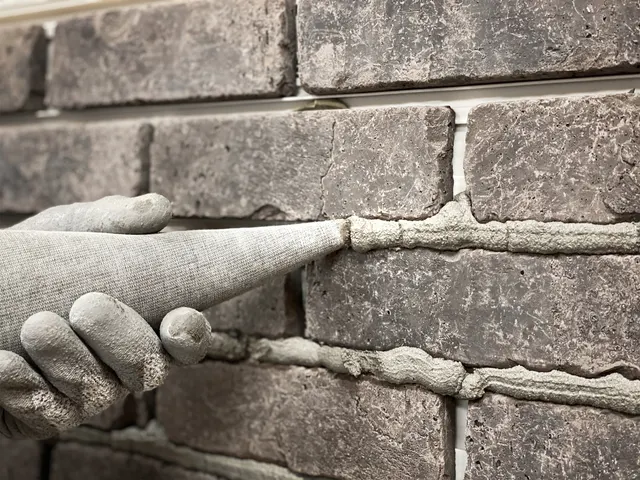
Haze and staining
A grey film of mortar over the face, or dark streaks after cleaning.
Why it happens
Thin set or mortar left on the face, or a cleaner that was too strong, too soon, or wrong for that brick.
What prevents it
- Wipe thin set off the face with a wet sponge as you set. It comes off in a minute and stays on for good.
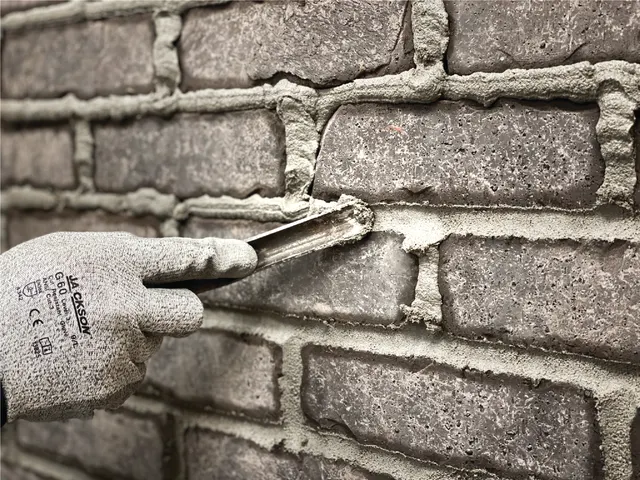
- Bag the joints with grouting/pointing mortar only when it has set to the feel of wet beach sand, then strike. Mortar that is too wet smears.
- Clean in the window the guide gives, 5 to 10 days after bagging, with the cleaner the brick maker names for that brick. Follow the maker on dilution and rinsing.
If it has already happened
Mortar haze comes off with the brick maker's cleaner. Burn marks from the wrong acid do not, so test any cleaner on a spare brick first.
Water
Most of these start with water.
Freeze-thaw, efflorescence and a good share of bond failures trace back to water that got behind the brick and stayed. The water page shows the layers, the drainage path, the flashing details and the air and water test results.
How long
What the schedule looks like.
Speedymason's own install rates, on a 3,000 square foot wall with a crew of 2. Nothing waits on a scratch coat to cure.
- Brick Lath
- 14
- working days
- Ultra-Speed
- 5.5
- working days
- Full brick
- 18.8
- working days, before the ledge and lintels
Bag the joints once the brick is set, strike when the mortar feels like wet beach sand, clean 5 to 10 days later. Your own wall size, crew, prices and labor rate in the calculator.
Questions
Asked before the brick is ordered.
Can thin brick on Speedymason be painted?
Yes. It is the same fired clay as full brick, so it takes paint, limewash and a German smear the way full brick does, and with the same cautions: let the mortar cure first, use a breathable coating outside so the wall can dry, and expect it to be permanent. The brick maker's guidance for its brick applies.
Is thin brick on Speedymason as durable as full brick?
The face is the same fired clay, made to the same ASTM C1088 grades. What differs is the backing. A Speedymason wall held plus and minus 75 psf design pressure and 112.5 psf overload on ASTM E330 with no failure, passed water penetration at 11.28 psf static and 15 psf dynamic, and the composite panel carries a 50-year warranty. After a car hit a Kwik Star store, the thin brick stayed on the wall. That last one is a field observation, not a test.
Does thin brick crack?
Brick and mortar move, so a long wall with no control joints will crack somewhere. The installation guide calls for control joints every 15 feet and at the building's own movement joints. With those in, cracking is rare and local.
What about Ultra-Speed outdoors?
Ultra-Speed sets the brick tight with no mortar joint, which sheds water differently from a jointed wall. King Klinker and Vandersanden are the two makers confirmed for it today and Speedymason is testing more. Ask Speedymason before specifying Ultra-Speed on an exterior wall in a freeze-thaw climate.
How long does a thin brick wall take on Speedymason?
At Speedymason's own install rates, 3,000 square feet with a crew of 2 takes about 14 working days on Brick Lath and about 5.5 on Ultra-Speed, against about 18.8 for full brick at 10 square feet an hour, before the ledge and lintels. There is no scratch coat to cure. Bagging follows setting, and cleaning comes 5 to 10 days after that.
Install guides by wall typeTest results and warrantyInstallation guide (PDF)
The biggest saving is time
The wall goes up sooner, and everything behind it moves up with it.
Price per square foot is where the conversation starts. Hours on the wall are where the money is, for the mason who sets it and for everyone waiting on it.
For the mason
20 to 30%
more work a year with the same crew
Nothing waits on a scratch coat to cure, and there are no lines to snap. The coursing is molded into the panel, so brick goes on the hour the panel is up. A job that takes fewer hours leaves room for the next one, on the same payroll, and the extra jobs are where the profit is.
Speedymason's own field figure. The calculator's benchmark run lands at about 34% more jobs a year against full brick and about 134% against metal lath, with the rest of each job counted at full length.
For owners, architects and general contractors
1 truck
of thin brick covers what takes five or six truckloads of full brick
The schedule compresses. A wall that finishes in fewer working days hands the site to the next trade sooner, and the scaffold is set once. Less lands on the site too: fewer deliveries, less to stage and lift, and no brick ledge or lintels to build first.
Industry figures from Speedymason's AIA course: a truckload of thin brick covers about 9,572 square feet, a truckload of face brick about 1,637.
Put your own job in hours and days Labor hours first, then cost, all six systems side by side.
Next step
A wall with a problem on it now?
Send a photo and the wall type. We will tell you what it is and what to do about it.